
Morgan County Parole or Probation
Parole and probation place a person in the community under rules, but they start in different ways. The State Board of Pardons and Paroles decides parole for an eligible person serving a Georgia prison sentence. Parole is conditional release before that sentence fully expires. Probation comes from the sentencing court. It may follow confinement, or the judge may order it instead of a prison term. The Georgia Department of Community Supervision, known as DCS, provides field supervision for both groups when they are assigned locally.
The source must match the question. A Board result can show parole posture, while the Morgan County court docket may show probation terms. A Morgan County Jail entry only records the jail event. It does not establish every later condition or prove that state supervision has ended.
Probation may appear in a sentence even when there was no state-prison release. Parole cannot be read from a county bond entry. If a sentence has both confinement and probation, note the sequence and the court that imposed it. If GDC custody and parole are involved, note the GDC ID and Board result as well. This simple separation keeps a past jail release from being mistaken for current supervision.
| Point | Parole | Probation |
|---|---|---|
| How it starts | Board grants conditional release from a GDC sentence | Court includes supervision in the sentence |
| Main decision record | Parole Board TPM and parolee tools | Morgan County criminal case and sentencing order |
| Local field agency | DCS when assigned in Morgan County | DCS for felony probation supervision |
| How it ends | Discharge, sentence expiration, or Board action | Court-ordered term ends or a court modifies it |
- Parole
- Conditional community release during a state prison sentence.
- Probation
- A court sentence that requires compliance with stated terms in the community.
- Discharge
- The formal end of a sentence or supervision term.
- Absconder
- A supervised person reported as having stopped contact or left supervision without approval.
Check Morgan County Release Supervision
Start with identity, not a similar name. Use a full legal name, any known GDC ID, and the Morgan County case number if available. The Inmate TPM Lookup serves a person who is still in state custody and has a parole decision. A Tentative Parole Month, or TPM, is a target month rather than a promised release. For a person already on parole, use the Parolee Database linked from the Board's post-release resources. For probation, check the criminal docket and sentencing order through the Morgan County Clerk.
A sound check follows the custody path. Someone released from the county jail on bond may be subject to bond terms without being on parole. A person transferred to GDC is tracked by the state offender and parole systems. Someone whose sentence lists probation is checked through the court record and DCS. The full Morgan County release-search path is available on the released-inmate search page.
- Confirm the exact person with name, birth details when shown, case number, or GDC ID.
- Check the Board TPM or parolee tool if a GDC sentence or parole is involved.
- Review the Morgan County criminal case for a probation sentence, revocation, or discharge order.
- Use the DCS office locator to identify the field office assigned to Morgan County.
- Call the assigned office for official routing when the public tools do not settle current status.
Morgan County DCS Supervision Office
Morgan County cases assigned locally are served through the DCS Milledgeville field office. The office provides the practical contact point for felony probation and parole field supervision. Its location page names the counties and current office contact details. Call before traveling if the question concerns a specific reporting instruction, since a public office listing does not reveal a person's private schedule or case plan.
Georgia DCS, Milledgeville2930 Heritage Place
Milledgeville, GA 31061
Phone: (478) 452-0152
Fax: (706) 403-2421
Hours: Monday through Friday, 8:00 a.m. to 4:30 p.m.
The official field-office image is available on the DCS Milledgeville location page.
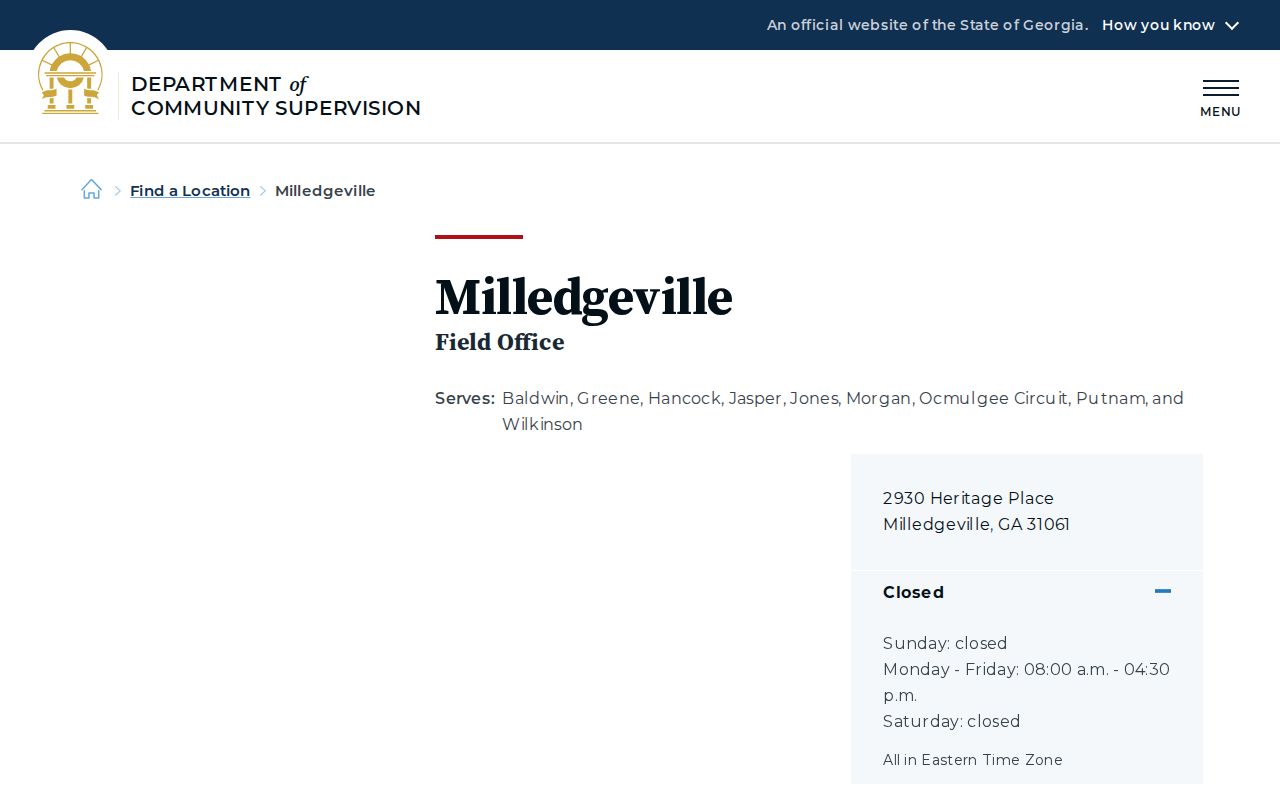
That listing confirms the local supervision route, but the court or Board record remains the source for why supervision exists.
Morgan County Parole Decision Records
Georgia parole decisions do not work like a public court hearing calendar. The Board evaluates eligible state cases and may set a TPM, deny parole, or conduct a later final review. Its parole process says most parole-eligible inmates become eligible after serving one-third of a sentence, but some offenses and sentence types are excluded or use different periods. Serious violent felony limits are addressed by O.C.G.A. Section 17-10-6.1. Eligibility is only the point at which review may occur. It does not ensure release.
The eligibility and guidelines page explains that a hearing examiner considers crime severity and a risk score. The Board may accept or reject a recommendation. Outcomes can include a future TPM, denial, reconsideration, a changed TPM, or final action near the planned month.
The source page shows how Georgia parole eligibility is framed.
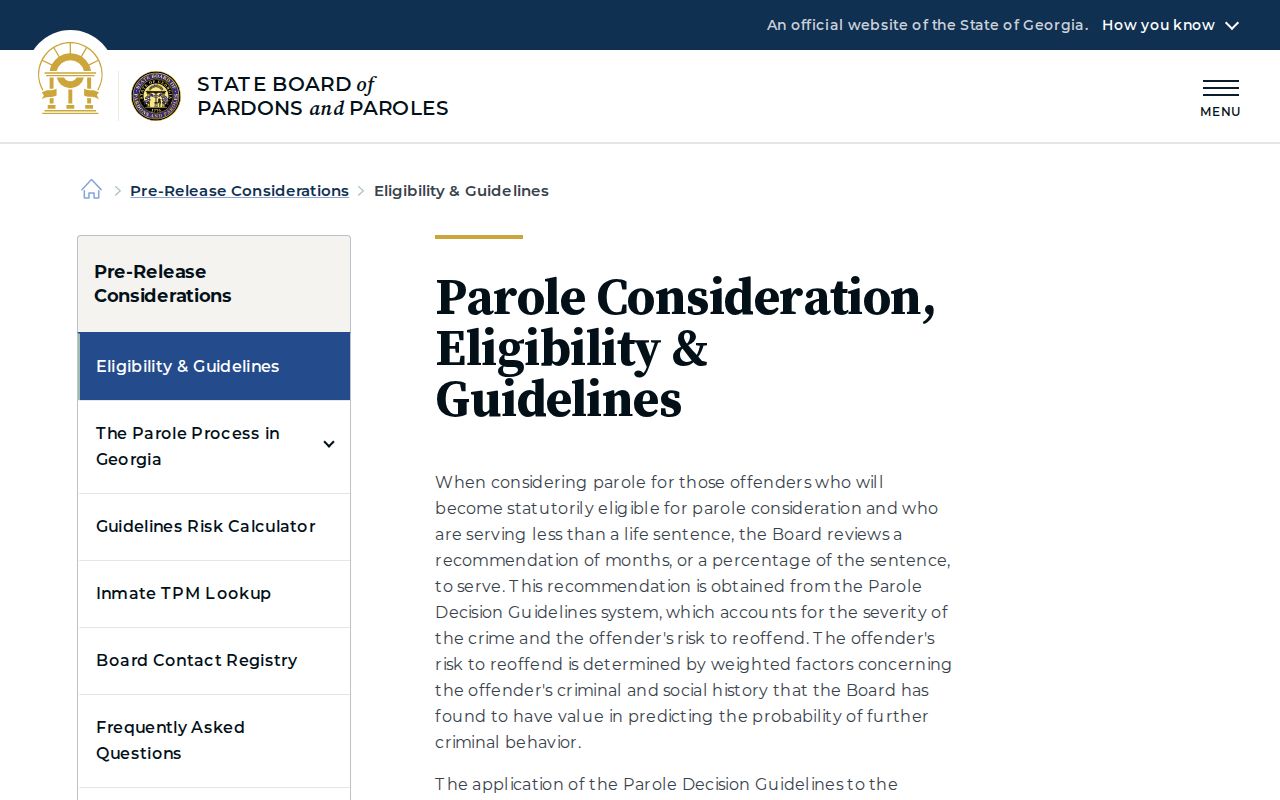
Use it to interpret a Morgan County state-prison case, then return to the person's official lookup result for the current decision.
Morgan County Parole Meeting Limits
The Board's public meetings should not be treated as individual parole hearings. A published January meeting notice states that offender cases are not discussed or considered during monthly Board meetings. Older Board material described a first-Tuesday schedule, but current dates can change or be canceled. Check the Board press-release and meeting-notice page for current public meeting information.
A monthly notice may identify a room, time, agenda, or cancellation. It does not reveal the private review schedule for a Morgan County offender. The Board reviews files under its own process and communicates case decisions through the proper record channel. A family member seeking a decision should rely on the TPM or parolee result and the Board's correspondence process, not infer an outcome from a public meeting date.
For a named Morgan County person, the TPM Lookup and parolee tools are more useful than attending a monthly meeting. A meeting agenda concerns Board business. It is not a docket of individual release votes, and absence from an agenda says nothing about a person's parole status.
The Board's meeting archive illustrates the type of notice available.
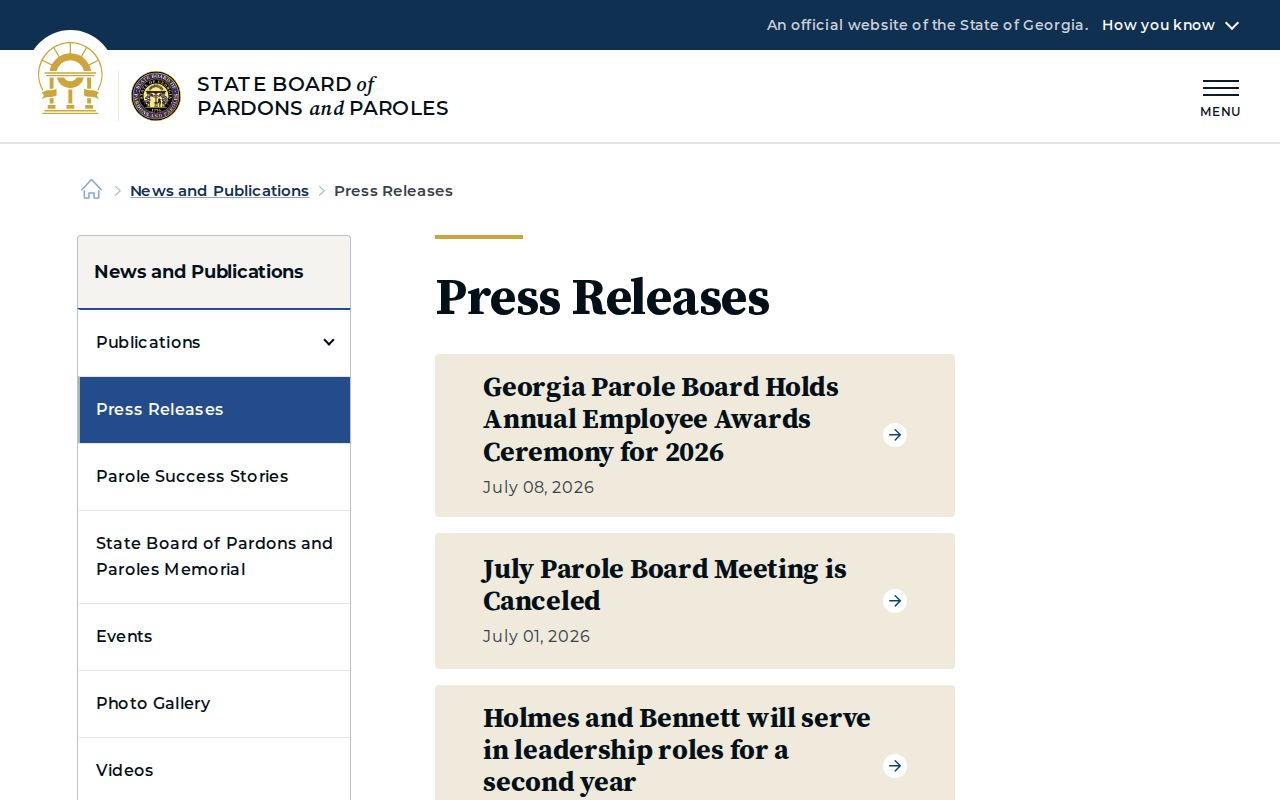
Read the date and cancellation status closely, then use case-specific tools for an offender outcome.
Morgan County Supervision Violations
Conditions vary with the judgment, the Board's certificate, and the assigned case plan. Common high-level duties can include reporting, obeying the law, complying with travel limits, and following special court or Board terms. Only the controlling order and supervising agency can state the actual conditions for one person. A public release record should never be used to guess them.
A violation does not always mean a new conviction. DCS or the Board may investigate, seek a warrant, change conditions, or begin revocation action. An absconder label generally means the person stopped required contact or left supervision without permission. A warrant is an order authorizing arrest. VINE may provide custody-change alerts after a new booking, but it is not a parole violation database. Confirm a public warrant or custody event with the issuing agency.
Correct Morgan County Release Records
Morgan County's Open Records Request Form has a Sheriff's Office-specific choice and detailed incident fields. That makes it the right documented route for obtaining a copy of a jail release entry that appears wrong or incomplete. The form names Open Record Custodian Kim Cox and lists ORR@morgancountyga.gov.
State exactly what is sought. Give the booking or release date, incident number when known, the person's name, and the precise record or correction at issue. Ask for the jail record itself, not a change to a court or DCS record held by another agency. A records request can produce the source copy. It does not authorize the custodian to alter a judicial sentence or parole decision.
Note: Route each correction to the office that created the record, since jail, court, Parole Board, and DCS entries serve different purposes.
Morgan County Supervision Discharge
Supervision ends through formal action, not merely because a person no longer appears in a jail search. Parole may end at sentence expiration or through a Board discharge. Probation generally ends under the sentencing order, a later court order, or completion recorded by the court and DCS. A discharge means the supervision term has formally ended. It differs from release from Morgan County Jail, which only marks the end of that local custody event.
Dates can differ across systems because they describe different milestones. A jail release date closes local custody. An actual GDC release date closes a state confinement event. A probation term may continue after either date, and parole may run until the state sentence or a discharge action ends it. Record each date with its agency label. That prevents a valid old date from being read as proof of current status.
Keep the final source record. For parole, that may be a Board or supervision record. For probation, use the Morgan County docket and any discharge or sentence-completion order. If the public view is unclear, request the record from the office that issued it. This distinction prevents an old jail entry, a current DCS assignment, and a completed sentence from being treated as the same status.