
Morgan County Scheduled vs Actual
A projected date is an estimate or sentence-based outer date. An actual release date records an event that already occurred. Georgia uses several labels, and they are not interchangeable. GDC records use MAX POSSIBLE RELEASE DATE for an outside state-sentence date. The State Board of Pardons and Paroles uses Tentative Parole Month, or TPM, for a possible parole review month. A jail or court record may instead show the end of a local sentence, bond action, or time served.
A pretrial detainee has no calculated sentence-expiration day. Bond may be posted, a judge may change the order, charges may be resolved, or another agency may add a hold. For that person, the Morgan County Jail and court docket are the right sources. Sentence calculations apply only after a sentence exists.
Find Morgan County Release Dates
Start by deciding whether the person is in the Morgan County Jail or has entered GDC custody. A county arrest alone does not create a GDC record. A transfer after a state sentence changes the responsible agency.
- Call Morgan County Jail at (706) 342-2164 for a local detainee or county sentence.
- Check the Morgan County court docket for bond, sentencing, jail credit, and later orders.
- For state custody, open GDC Find an Offender and search by name or GDC ID.
- Read CURRENT STATUS, MAX POSSIBLE RELEASE DATE, ACTUAL RELEASE DATE, institution, and sentence entries together.
- If parole eligible, compare the record with the TPM Lookup.
- Verify a disputed state record in writing with GDC Inmate Records and Information.
The Morgan County released inmate lookup provides the broader path after release. This page focuses on when custody may end and which date label controls.
The official GDC offender-search form is the state-prison search entry.
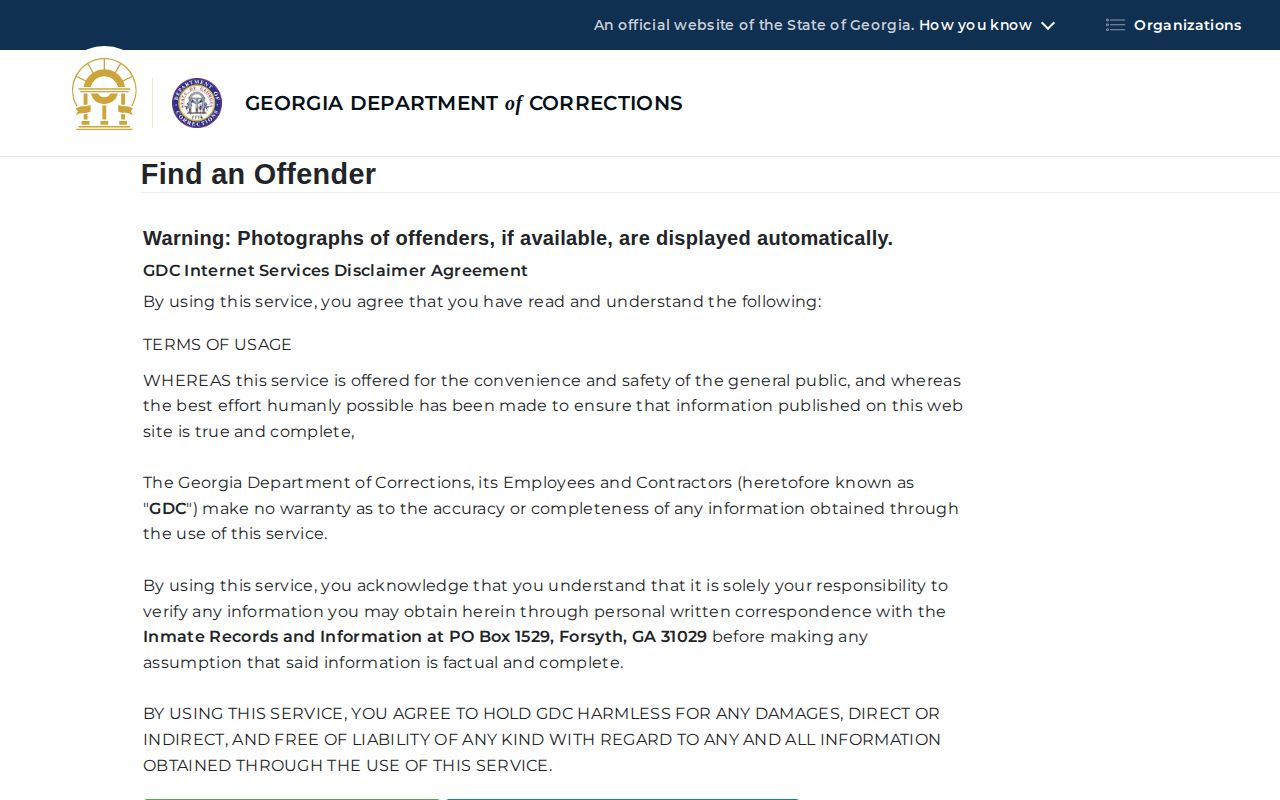
Its result must be matched to the right person and read alongside parole and sentence records.
Morgan County GDC Date Fields
Public GDC detail records can contain the name, GDC ID, major offense, most recent institution, sentence history, current status, maximum possible release date, and actual release date. The status and actual-date fields are central. “ACTIVE” and “CURRENTLY SERVING” do not indicate release. An inactive status with an actual date supports a past release from GDC custody.
| State field | Meaning |
|---|---|
| MAX POSSIBLE RELEASE DATE | The outer GDC sentence date after applicable credit, not a promise of custody ending that day. |
| ACTUAL RELEASE DATE | The recorded GDC release event, or “CURRENTLY SERVING” when custody continues. |
| CURRENT STATUS | Distinguishes an active state record from an inactive one. |
| TPM | A tentative parole month subject to final review, postponement, or cancellation. |
| Sentence entries | Show terms and convictions that help explain the maximum date. |
GDC warns that online data should be verified through written correspondence before assumptions are made. Send verification to Inmate Records and Information, P.O. Box 1529, Forsyth, GA 31029. The public record is useful, but a data conflict belongs with its originating office.
Morgan County Earned-Time Rules
A county sentence follows a different rule from a GDC sentence. O.C.G.A. Section 42-4-7 addresses county inmate records and release at sentence expiration less earned-time allowances. The sheriff or custodian maintains the jail record. Court-awarded jail credit and the applicable county calculation therefore belong with the local record, not with GDC's PIC program.
For eligible state offenders, the Performance Incentive Credit program can award up to twelve points. GDC says those points may reduce a TPM or Maximum Release Date by one to twelve months. Eligibility has exclusions, including short sentences, life sentences, death sentences, non-parole-eligible offenses, and certain mandatory terms. PIC is based on qualifying progress and conduct. It is not automatic good time for every Georgia prisoner.
The GDC page documents how PIC can affect a Morgan County state-prison date.
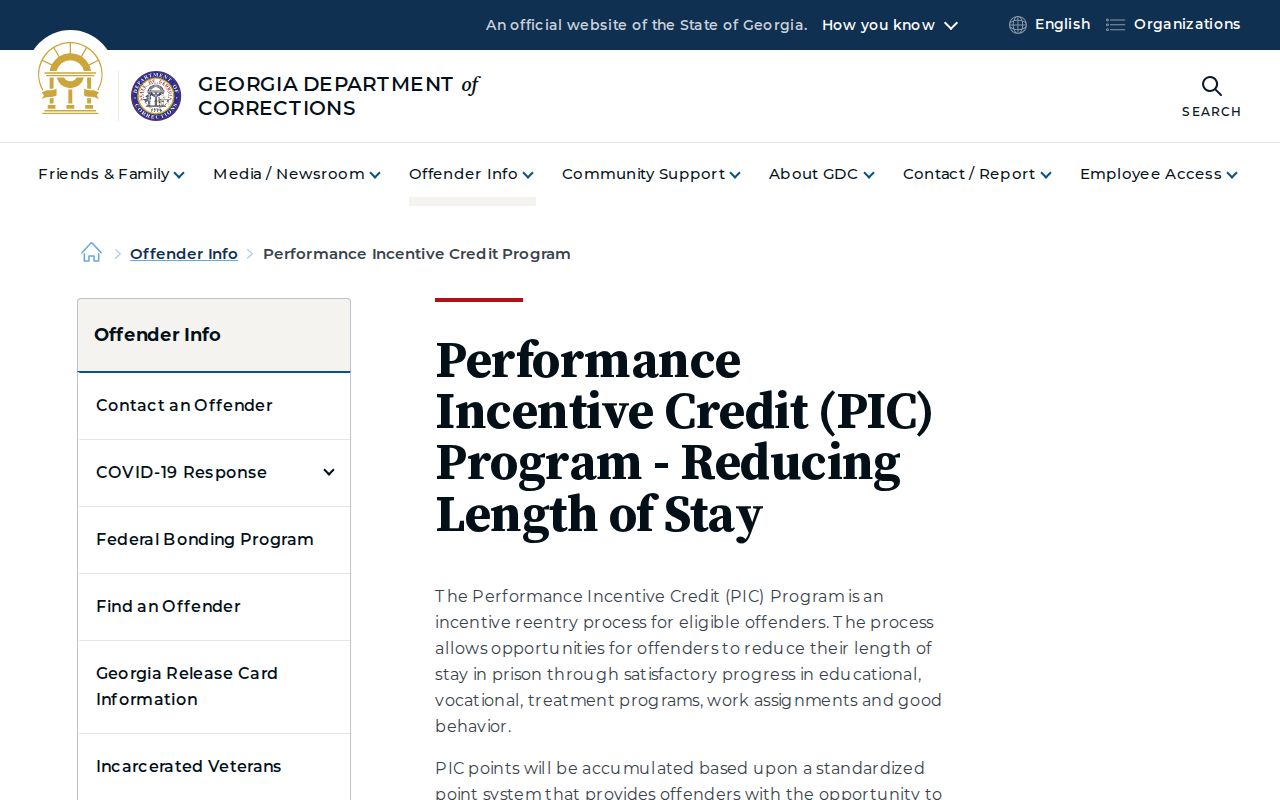
This program applies after commitment to GDC and should not be used to calculate a local jail term.
Which Morgan County Date Controls?
Morgan County release dates cannot be collapsed into one formula. A local jail sentence can turn on the county earned-time statute and court credit. A state sentence uses GDC's maximum possible release field. Parole adds a TPM, which is a review month rather than a guaranteed day. PIC may affect an eligible GDC date.
- County earned time
- An allowance applied to an eligible local jail sentence under county-jail law.
- Maximum possible release date
- The outer date shown in a GDC state record.
- Tentative Parole Month
- A conditional month for final parole review, not a final grant.
- Actual release date
- The recorded date custody ended in the reporting system.
The custody sequence resolves most confusion: arrest and local hold, court sentence, possible transfer to GDC, parole review when eligible, and actual release. Each stage has its own keeper of records. Ask the Morgan County Jail about local custody, the court about orders and credit, GDC about state calculations, and the Parole Board about TPM action.
Morgan County Date Changes
A displayed date can move when the legal or custody record changes. Some updates shorten the period. Others delay release or redirect the person to another agency.
| Change | Effect |
|---|---|
| Jail credit correction | Changes time already credited toward the sentence. |
| Court order | May modify bond, sentence, or release authority. |
| Hold or detainer | Can prevent return to the community after one custody basis ends. |
| GDC update | May revise the sentence calculation after transfer or record review. |
| Parole action | Can set, advance, postpone, cancel, or deny a TPM. |
| PIC credit | May reduce an eligible state date under program rules. |
| Transfer | Ends one agency's custody while another agency takes control. |
Georgia does not impose a universal “85 percent” rule on every county jail and state case. O.C.G.A. Section 17-10-6.1 sets restrictions for serious violent felonies. The Parole Board says specified non-life serious violent felony sentences for crimes on or after January 1, 1995 are not parole eligible. Other parole-eligible state inmates are generally eligible for consideration after one-third of the sentence, but eligibility is not release.
Confirm Morgan County Release Dates
Use the Morgan County Open Records Request Form when a jail date needs written support. Identify the person, approximate booking period, and exact booking or release fields sought. A court copy may be needed when the issue is bond, sentence credit, or a later order. For state custody, GDC's open-records process gives an initial response within three business days and lists non-medical copies at ten cents per page, with search or redaction time billed under its stated rule.
VINE can add an alert while release is pending. Register through the VINE Inmate Check, but do not treat a notice as the sentence record. For parole, a TPM can still change after misconduct or final review. The Parole Board may postpone, cancel, rescind, or advance it.
The Georgia TPM page is the source for that conditional month.
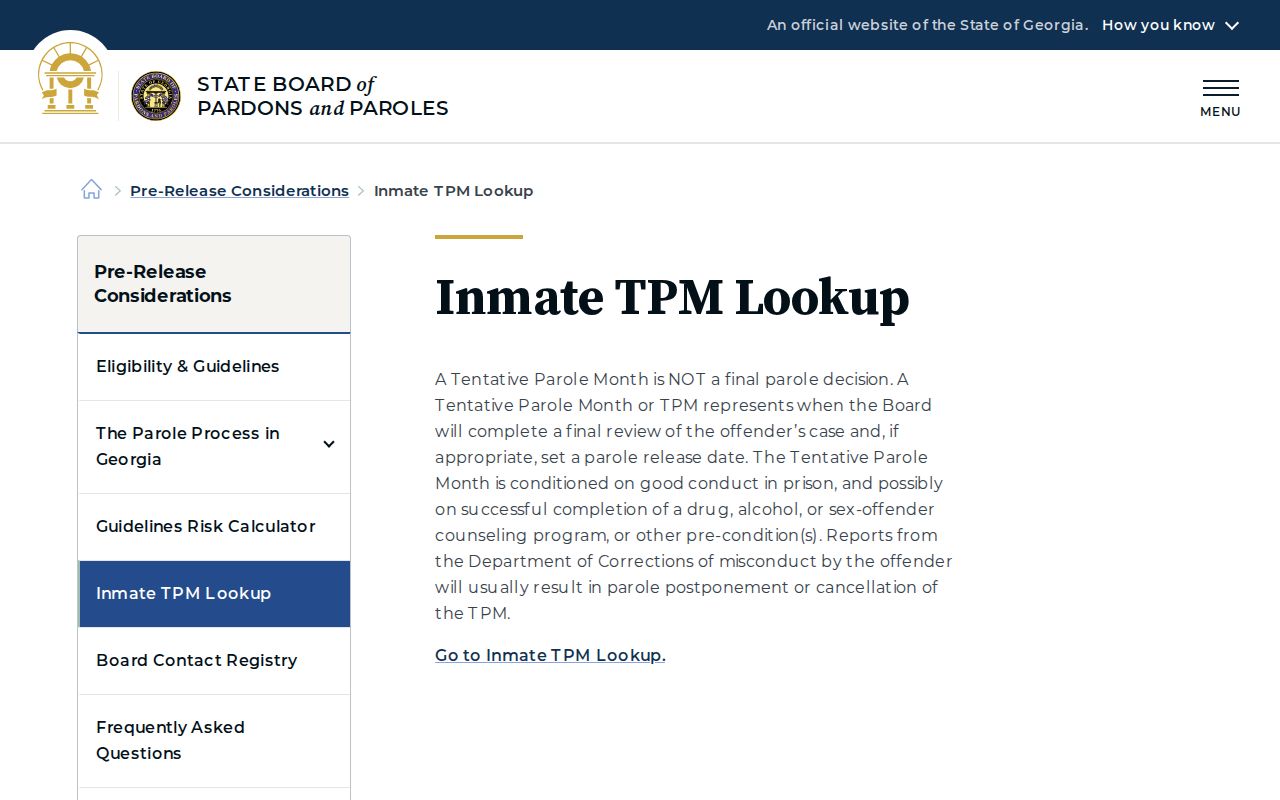
Compare its result with GDC status and the eventual actual release entry before concluding that state custody ended.
Morgan County Parole Timing
A TPM is not the same as a projected day. The State Board of Pardons and Paroles uses it to identify a tentative month for final review. Good conduct and required programs may remain conditions. Misconduct reports can lead to postponement or cancellation, and the Board may deny parole instead of setting release. For most parole-eligible state inmates, consideration begins after one-third of the prison term, but few are necessarily released at first eligibility.
Life sentences follow distinct Georgia rules. The Board describes serious violent felony life-sentence eligibility periods by crime date: seven years before 1995, fourteen years in 1995, and thirty years for crimes on or after July 1, 2006. A life-sentence decision is handled as grant or denial, not like the routine non-life TPM path. A denial may later be reconsidered under Board policy.
Monthly Board meetings are not individual case hearings. Current notices appear on the Parole Board press-release page, and the Board states that offender cases are not discussed or considered at those monthly meetings. A person seeking one inmate's timing should use the TPM and parolee tools, not meeting attendance. Current notices also matter because meetings can be moved or canceled.
After parole release, field supervision in Morgan County is handled through the Department of Community Supervision when assigned locally. The Milledgeville field office serves Morgan County. Supervision after release does not change the actual GDC release date, but it does show that release from prison may be followed by parole conditions in the community.
Serious violent felony rules require close reading of the conviction and crime date. The statute can impose mandatory service and parole limits, but it should not be turned into a broad percentage claim for all Georgia cases. County jail terms, parole-eligible GDC terms, mandatory state terms, and federal sentences follow different laws. The court's sentence and the responsible corrections agency provide the record for the individual case.
Another hold can also make an expected release look wrong. A jail may finish one local basis for custody while a warrant, detainer, transfer order, or another agency's hold remains active. Morgan County's HB1105 reports document aggregate immigration-detainer activity, though they do not identify individuals. Ask the jail whether a public transfer or detainer notation exists. Describe the event as release from one facility only when the next custody destination has not been confirmed.
For local bond timing, use the court rather than a sentence formula. Morgan County Magistrate Court handles first appearances, bond hearings, and preliminary hearings. The Clerk of Superior and Juvenile Court provides criminal case-search options for many later proceedings. A bond order may explain why the person left jail, while the case remains pending. The jail record proves physical release; the court record explains the authority for it.
A final check should compare dates from the same custody stage. Do not compare a county booking date with a state maximum date as if they form one schedule. Keep the court sentence, jail credit, GDC status, parole action, and actual release entry in order. When two records conflict, ask the agency that owns the disputed field to correct or explain it. That method is slower than trusting one projected date, but it produces a sound Morgan County release timeline.